Forget digital perfection. The music that hits hardest is built from wood, wire, and bone — not plugins.
Music production today is obsessed with perfection. Every transient tightened, every rough edge filed smooth by some algorithm that’s never felt a guitar string vibrate under its fingers — because it doesn’t have any. That clinical sheen is everywhere. And it is killing the soul of rock.
This isn’t a manifesto against technology. It’s a reminder of what makes a guitar track feel like something — the friction, the physical mess, the unpredictable interaction between player and gear. Whether you’re locked in a rehearsal space at midnight or hauling a van full of equipment between venues, the tools you choose shape everything. Here’s what actually matters.
Electric Guitars: The Voice of the Soul
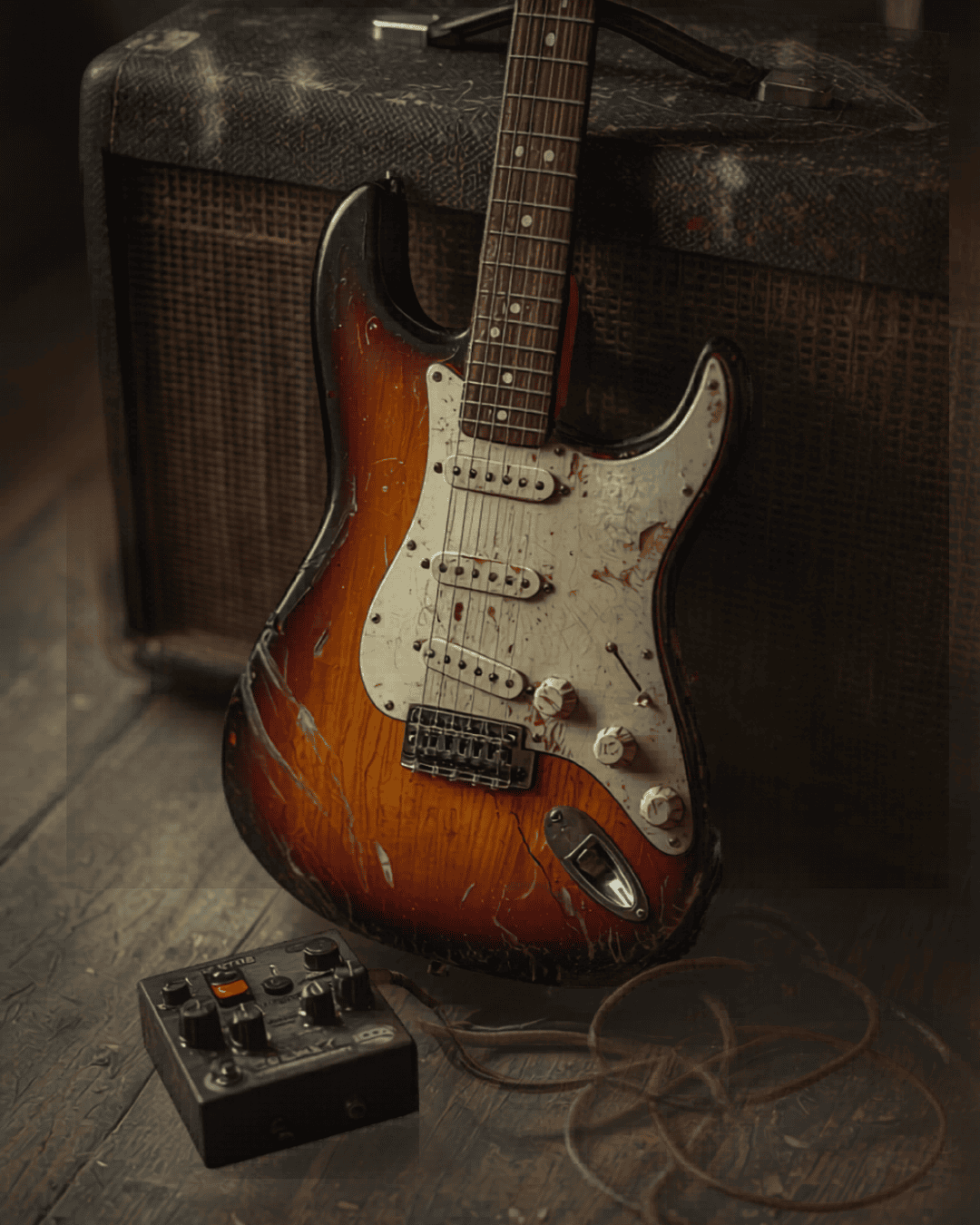
Your guitar is an extension of your body. It should breathe, resonate, push back a little. The instruments that define indie rock are not the pristine, feather-light things built for comfort — they’re the ones that have weight, character, and something to say before you’ve even played a note.
Solid Bodies & Sustain
If you want real sustain, skip the chambered body. A solid, non-chambered build lets the wood vibrate fully, giving you that thick, resonant tone that rings out and hangs in the air. It’s pure physics — the more wood, the more the instrument becomes part of the sound, not just a vehicle for it. A Gibson Les Paul Custom is the textbook example: heavyweight, warm, and built to handle the road’s abuse without flinching. Temperature swings, humidity changes, getting thrown in a van — it takes it all.
Always tour with a backup guitar. Not as a precaution — as a rule. Strings break mid-song, electronics fail, necks get knocked. A sturdy case and a reliable stand for your main and your backup isn’t optional kit. It’s the price of taking this seriously.
Reliable Amps: The Roar of the Beast
An amplifier doesn’t just make you louder. The right amp reacts — it pushes back, responds to how hard you dig in, compresses naturally when you drive it into the red. That conversation between player and amp is where a lot of the magic in indie rock actually lives.
Why Tube Amps Win
Tube amps are heavier, less reliable on a bad night, and more expensive to maintain. They’re still worth it. Push a good tube amp and it breaks up in a way that feels organic — like the gear is alive under your hands. There’s a natural compression and harmonic richness that solid state circuits can replicate on paper but rarely in practice. That said, a great overdrive pedal can coax genuine warmth from a solid state amp when you need the reliability, and plenty of touring bands use exactly that combination.
Whatever you run, protect it. A power conditioner between your rig and a dodgy venue socket isn’t a luxury. And carrying a backup amp head is the kind of insurance that pays out exactly when you least expect it.
Analog Overdrive Pedals: The Gritty Heartbeat
This is where you carve out your sound. Not in a DAW, not in a plugin chain — on the floor, in real time, with your boot on a pedal and your hands on a guitar.
Building Your Board
A good analog overdrive is the centrepiece. Not because you need distortion — but because a great overdrive responds to your dynamics. Roll your guitar’s volume back and it cleans up. Crank it and it sings. That responsiveness is the whole point. Stack it into a cranked tube amp and you’ve got something that no digital recreation has quite nailed.
Beyond that: delay for space and depth, reverb for atmosphere, and modulation — chorus, tremolo, phaser — for texture when the song calls for it. Individual analog pedals each carry their own character, and that character bleeds into your sound in ways that matter. Multi-effects units are useful for streamlining a live rig, but don’t mistake convenience for personality.
Pay attention to how your pedals interact with your amp. An overdrive going into the front of a loud tube amp is a different instrument than the same pedal at bedroom volume. Learn those interactions and they become tools, not accidents.
Drum Kits: The Rhythmic Backbone
The drums are where indie rock lives or dies. They’re the pulse — the thing that either makes a room move or doesn’t. And on the road, the drum kit is the gear that takes the most punishment.
Portable Kits Without Compromise
For touring, lightweight hybrid kits are the sensible choice. They load faster, fit in smaller vehicles, and they don’t sacrifice the feel that matters — the snap of a snare, the natural decay of a cymbal, the way the kick drum pushes air into the room. What you’re looking for is a kit that responds honestly to every hit, one that translates the drummer’s dynamics rather than flattening them.
Pack extra drumheads, extra sticks, and a good drum throne. Durable drum cases are non-negotiable — not just for protection, but for the speed of a quick changeover when the next band is already sound-checking. The gear that enables a fast setup is gear that keeps the energy alive.
| Category | What to Look For | Why It Matters |
|---|---|---|
| Electric Guitars | Solid, non-chambered body — Gibson Les Paul Custom | Maximum resonance and sustain; built to take touring punishment |
| Amplifiers | Tube amp + power conditioner + backup head | Dynamic response and natural breakup that reacts to how you play |
| Pedals & Effects | Analog overdrive, delay, reverb, modulation | Organic character that responds to your input — not just your preset |
| Drum Kits | Portable hybrid kits + spares + hard cases | Honest dynamic response and road-ready durability |
| Accessories | Strings, picks, tuner, capo, power strips, backup cables | The small stuff that prevents a great gig from becoming a disaster |
Essential Accessories: The Unsung Heroes
Nobody talks about the cable that saved the show. The spare string set that kept a song from dying. The tuner that caught a drift in pitch before the chorus. These things don’t get posted on gear forums but they are — consistently — the difference between a professional performance and a messy one.
Fresh strings matter. A broken string mid-set pulls you out of the moment completely, and it’s entirely preventable. Carry more picks than you think you’ll need — different gauges for different feels, and they disappear constantly. A solid digital tuner is non-negotiable, especially moving between venues where temperature kills tuning stability.
Beyond that: a capo for quick key changes, reliable power strips and extension leads for your pedalboard, and backup supplies for everything critical — cables, power adapters, drum sticks, drumheads. The road is unpredictable. Your kit shouldn’t be.
The best music comes from the friction between wood, wire, and bone. The imperfections aren’t flaws — they’re the point.
Stop Tweaking. Start Making Noise.
It’s easy to spend hours chasing the perfect sound in a DAW — adjusting EQ curves, layering plugins, hunting for some theoretical ideal that keeps moving the moment you get close. Billie Eilish and FINNEAS recorded a Grammy-winning album in a bedroom. Not because the gear was perfect, but because they stopped waiting for perfect and started making music that was honest.
The gear matters. The choices matter. But none of it means anything until you’re actually playing — until the amp is cranked, the overdrive is screaming, and you’re committed to the sound that’s coming out of the speakers right now. The friction between you and the instrument, between the instrument and the amp, between the amp and the room — that’s where the music lives.
Put down the mouse. Pick up the guitar. Turn it up.
Frequently Asked Questions
What’s the single most important piece of gear for an indie rock sound?
A responsive electric guitar going into a dynamic amp is the foundation. Everything else is shaping what those two create together. If you have to prioritise, invest in the guitar-amp relationship above everything else.
Are solid state amps ever good for indie rock?
Absolutely. Tube amps are the preference for their warmth and natural breakup, but solid state amps are more reliable on tour, handle power inconsistencies better, and paired with a quality analog overdrive pedal they can deliver a genuinely great tone. Plenty of serious bands use them.
Do I actually need a backup guitar when touring?
Yes. No exceptions. Strings break, electronics fail, and accidents happen — usually at the worst possible moment. A backup guitar is not caution, it’s professionalism.
What pedals are essential for indie rock?
Start with a good analog overdrive. Add a delay for depth and atmosphere, a reverb for space, and then modulation — chorus or tremolo — for texture when the song calls for it. Build from the overdrive outward and let the music tell you what it needs next.
How do I protect my gear on the road?
Hard cases for guitars and drums. A power conditioner to protect amps from bad venue power. Padded bags for everything else. And spares for anything that can break: strings, cables, picks, drumheads, power supplies. Pack as if it will go wrong, and it usually won’t.
100% Human. Zero AI. Pure Guitar-Driven Power.
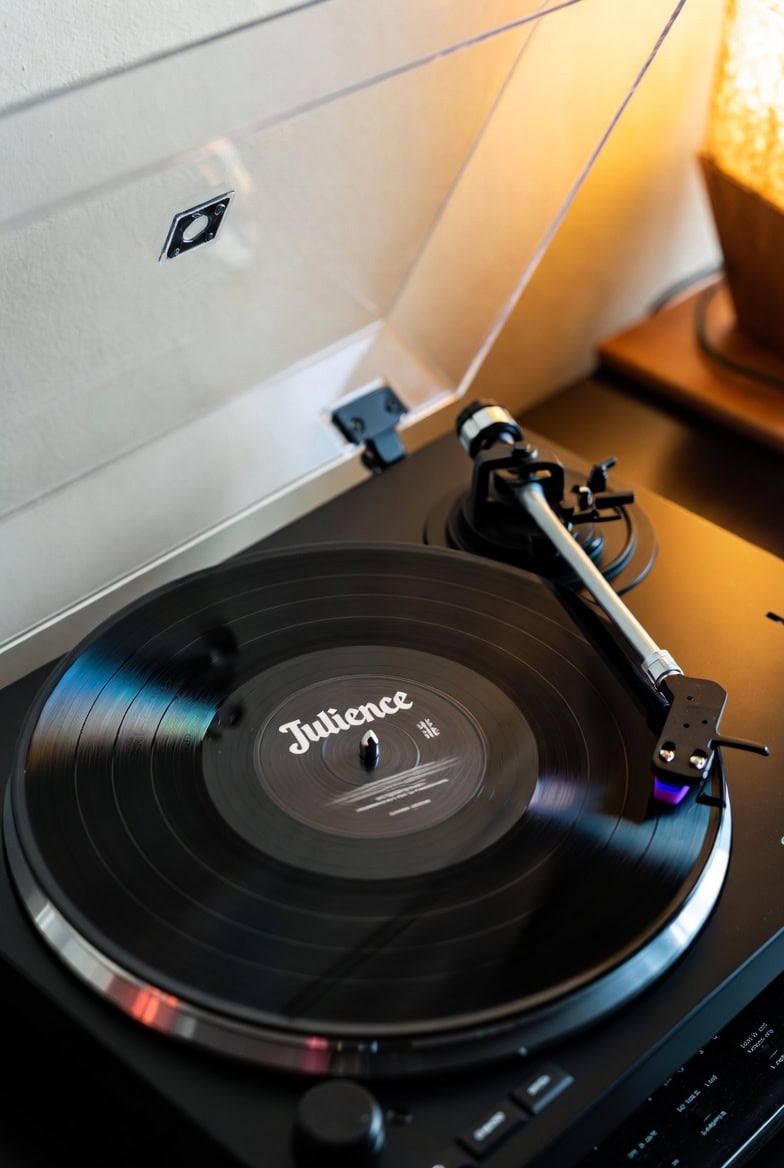
Stream the latest Julience tracks — made with exactly the kind of gear we’re talking about.
🎸 Listen Now