
The streaming era promised music lovers everything — instant access, infinite choice, perfect sound. What it delivered instead was homogenization. Today, a growing counter-culture is pushing back, and it’s winning.
The Algorithm Problem
Platforms like Spotify and TikTok don’t just distribute music — they shape it. When an algorithm rewards certain tempos, song lengths, and production styles, artists begin unconsciously (or very consciously) writing to those parameters. The result is music optimized for retention, not resonance.
Listeners are noticing. And they’re voting with their wallets.
Vinyl’s Unlikely Comeback
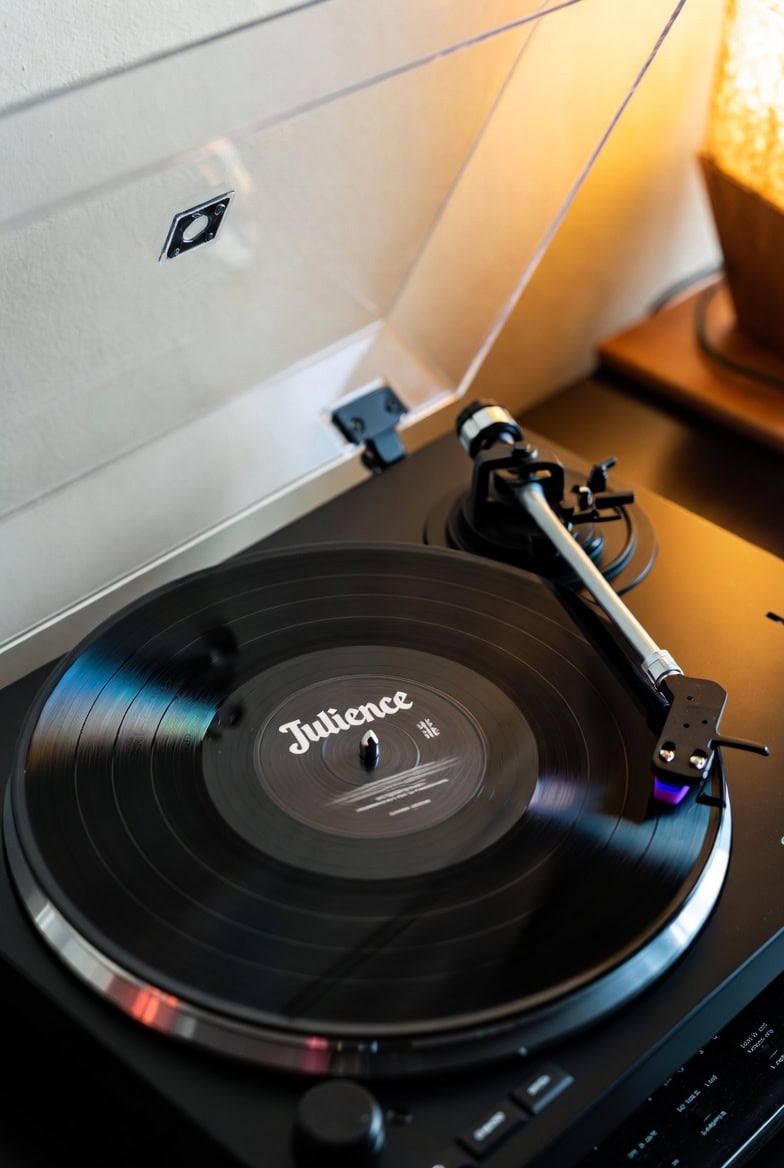
Vinyl record sales have grown for 19 consecutive years, a trend that shows no sign of slowing. Albums like Fleetwood Mac’s *Rumours* — released in 1977 — regularly outsell debut records from contemporary artists. Taylor Swift’s *1989 (Taylor’s Version)* demonstrated that even modern pop superstars can drive massive physical sales when they commit to the format.
This isn’t nostalgia driving the numbers. It’s something more deliberate.
Why Vinyl Wins on Sound
Digital streaming compresses audio files to reduce bandwidth. That compression discards frequencies — often the subtle ones that give a recording warmth, space, and character. Vinyl, as an analog format, captures the full frequency range of a recording, including the slight imperfections that make a performance feel human.
Audiophiles call this “warmth.” What they’re really describing is the presence of information that digital formats strip away.
Why Vinyl Wins on Experience
Playing a record is an intentional act. You select an album, remove it from its sleeve, place the needle, and listen — usually without multitasking. The album artwork, liner notes, and track sequencing become part of the experience in a way that a Spotify playlist never replicates.
Collecting has become a lifestyle in itself. Limited pressings, colored variants, and exclusive editions sell out within hours. For many collectors, vinyl is simultaneously a passion and a long-term investment — a physical artifact of culture in an increasingly ephemeral digital world.
The Underground Fighting Back
The anti-algorithm movement isn’t only happening in living rooms with turntables. It’s thriving online too — just not where the major platforms want it to be.
SoundCloud and the Bootleg Economy
SoundCloud has become the spiritual home of underground music culture. Independent DJs and producers use the platform to share rough, unpolished bootlegs of ’90s dance classics — UK Garage, trance, early house — prioritizing rawness over polish. Many of these producers have built followings of tens of thousands without a label, a marketing budget, or an algorithmic boost.
This grey market of unofficial remixes operates outside the formal music industry. It’s discovered through Reddit communities, Discord servers, and Boiler Room sets. The curation is entirely human — word of mouth, shared passion, genuine taste.
That’s precisely what makes it valuable.
The Tube Amp Renaissance
The same instinct is driving a resurgence in analog hardware. Tube amplifiers, once considered obsolete, are back in demand among guitarists and producers who want the natural harmonic distortion that solid-state and digital equipment can’t authentically replicate. Pushed to their limits, tube amps produce overtones and compression that feel alive in a way that plugins — however sophisticated — do not.
Human Imperfection as a Feature
The irony of the algorithm era is this: in pursuit of perfection, it produced something listeners find deeply unsatisfying.
A single-take vocal with a slight crack on the high note. The natural reverb of a room captured in a recording. A drummer who rushes the tempo slightly during an emotional passage. These “flaws” are what make music feel like it was made by a person, for a person.
That quality cannot be coded. It cannot be generated. And increasingly, it cannot be found on the platforms built to serve algorithmic efficiency.
What This Means for Independent Artists
The bifurcation of the music business creates a genuine opportunity. While major labels optimize for streaming metrics, independent artists who commit to authenticity — raw recordings, physical releases, direct community engagement — are finding audiences who are hungry for exactly that.
The tools are available: vinyl pressing services have never been more accessible, SoundCloud remains free to use, and communities built around genuine musical taste are active and growing.
The artists who will outlast the algorithm are the ones who never tried to please it in the first place.